
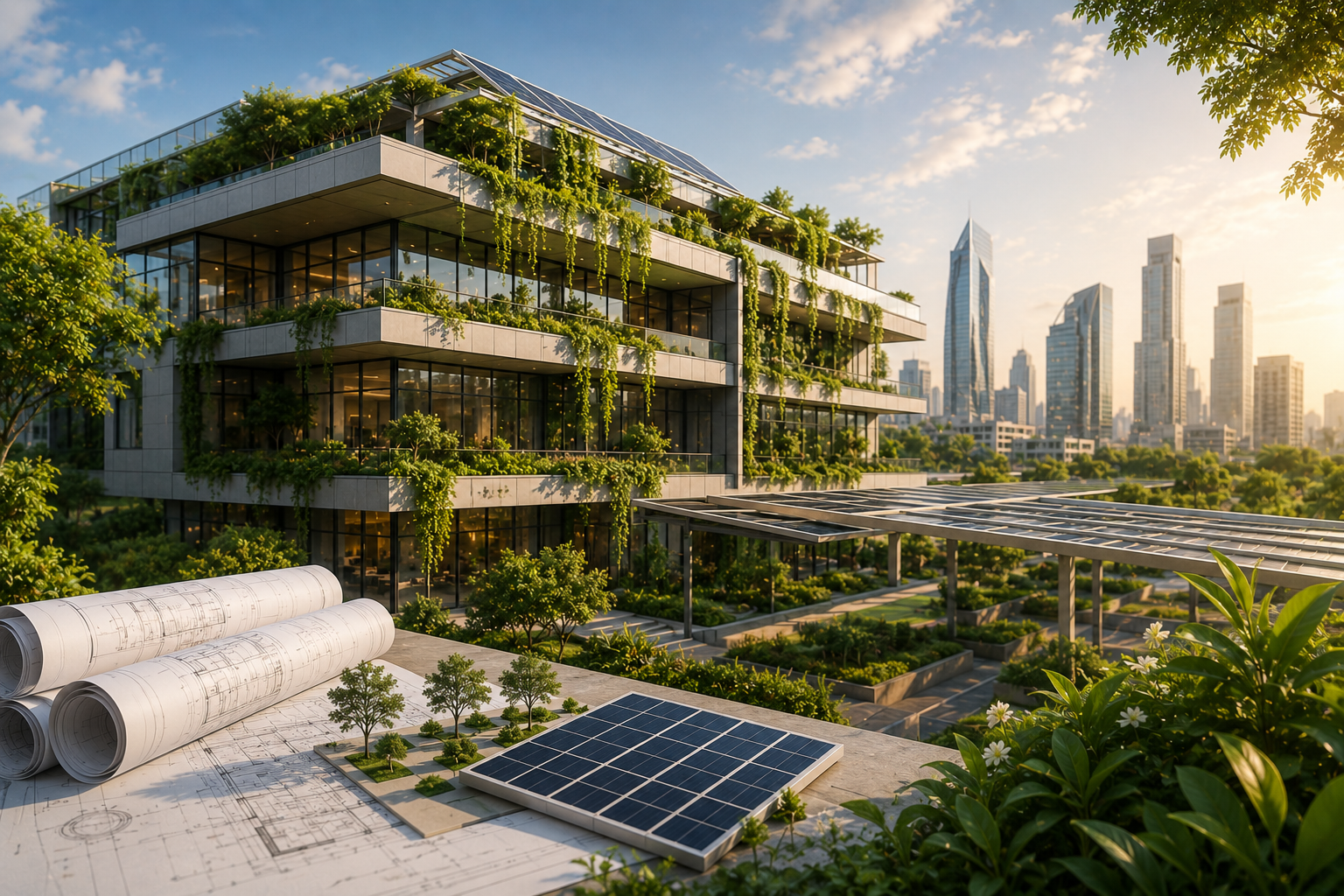
Introduction to Green Buildings and the Importance of Sustainability in Saudi Arabia
Green buildings are one of the core strategies for achieving urban sustainability in Saudi Arabia. These entities allow the environmental impact to be reduced through the use of environmentally friendly materials, modern technology, and sustainable design methods. The main objective of green buildings is to improve environmental performance, which reflects Saudi Vision 2030’s promotion of economic diversification and environmental protection.
The importance of sustainability in Saudi Arabia is evident in the range of benefits that green buildings deliver. On the social level, these buildings help enhance residents’ quality of life by providing healthy and comfortable environments. Techniques such as improved natural ventilation and solar lighting help reduce reliance on air conditioning and artificial lighting systems, leading to the creation of more comfortable spaces.
As for the environmental benefits, green buildings contribute effectively to reducing carbon emissions and climate warming. By using resources wisely, construction projects can reduce water and energy consumption and promote recycling and waste management. Consequently, these buildings help protect biodiversity and preserve the environment.
From an economic perspective, green buildings reflect a shift toward innovation and sustainable technology, which strengthens the Kingdom’s competitiveness in global markets. Implementing standards such as the MOSTADAM and LEED certifications gives projects the ability to control costs in the long term, in addition to attracting sustainable investment. The trend toward green buildings is therefore a strategic choice that contributes to achieving the Kingdom’s sustainable development goals.
The MOSTADAM and LEED certifications are among the most prominent certifications concerned with sustainable design and construction, and both aim to improve building performance environmentally and economically. However, there are clear differences between them in terms of criteria and requirements.
The LEED certification, known as Leadership in Energy and Environmental Design, was developed in the United States by the U.S. Green Building Council. This certification relies on a rating system that combines energy efficiency, resource use, and providing a healthy environment for occupants. The criteria are points-based, so buildings can obtain varying levels of certification depending on their performance in multiple areas such as energy savings, water management, and the use of sustainable materials.
On the other hand, the MOSTADAM certification was developed by the Saudi Standards, Metrology and Quality Organization, and it is better suited to the local context of Saudi Arabia. This certification focuses on the environmental challenges facing the Kingdom, such as water scarcity and heat. MOSTADAM requirements include designing buildings appropriately for the Kingdom’s climate and paying attention to sustainable technologies that are consistent with local customs and cultures. There are also specific criteria that require achieving a certain level of resource-use efficiency.
When comparing the two certifications, we find that LEED provides an internationally recognized standard used worldwide, which is an advantage for projects planning to expand or have a presence outside the Saudi market. Meanwhile, the MOSTADAM certification offers solutions better suited to the Saudi market, and can therefore be considered more compatible with the local environment and the particular needs of investors and project owners. The choice between the two certifications is a strategic matter related to the environmental and economic objectives of each project.
Benefits of Green Buildings in Saudi Arabia
Green buildings in Saudi Arabia are characterized by many benefits that have a positive effect on the environment and quality of life. First, these buildings improve air quality and the safety of residents by reducing harmful substances and carbon emissions. This helps promote the health of individuals and of society as a whole. The use of sustainable materials and modern technologies also contributes to achieving a more efficient built environment.
Furthermore, green buildings save a great deal of energy through energy-saving technologies, such as solar panels and advanced thermal insulation systems. This contributes to a noticeable reduction in energy costs, which leads to savings in the long term. According to previous studies, green buildings can reduce energy consumption by up to 30%, which reflects the positive impact of a growing sustainable environment.
From an economic standpoint, growing interest in green buildings increases property values, as investors and buyers increasingly tend toward properties that adopt sustainability standards. According to a study conducted by a specialized entity, the values of green properties in Riyadh rose by 20% compared with conventional properties. There is therefore a strong correlation between sustainability and increased property value.
In addition, mention should be made of some successful projects in Saudi Arabia, such as the “Smart City” project in King Abdullah Economic City, which embodies the ideal model of green buildings in terms of its sustainable design and effective use of resources. These projects undoubtedly contribute to achieving sustainability goals and reflect the efforts made at the national level toward a better environmental future.
The Role of Engineering Offices in Applying Sustainability Standards
Engineering offices, such as Kayan Smart Engineering Consultancy, play a pivotal role in applying sustainability standards during the design and construction stages of green buildings in Saudi Arabia. Designing these buildings requires observing a set of principles related to the efficient use of resources and energy, which helps reduce environmental impact and achieve sustainable development. Sustainability standards such as the MOSTADAM standards and LEED are an essential part of this framework, as they aim to improve the quality of engineering projects and the efficiency of environmental performance.
One aspect of the work of engineering offices is cooperating with government authorities and public utilities to ensure compliance with the required legislation and standards. This includes communicating with ministries such as the Ministry of Municipalities and Housing and the Ministry of Environment, which set guidelines and standards for green buildings. By taking these standards into account, engineers can design effective and innovative solutions that use sustainable building materials and reduce carbon emissions.
Furthermore, engineering offices must be prepared to take advantage of the latest technologies and software that support Building Information Modeling (BIM) and environmental performance analysis tools. These technologies not only help in designing more efficient buildings, but also contribute to reducing operating costs in the long term.
Ultimately, engineering offices represent the link between the theoretical concepts of sustainability and the practical requirements of executing projects. By launching projects that align with LEED and MOSTADAM standards, these offices contribute to raising energy consumption efficiency and achieving sustainability in the building environment in Saudi Arabia.