
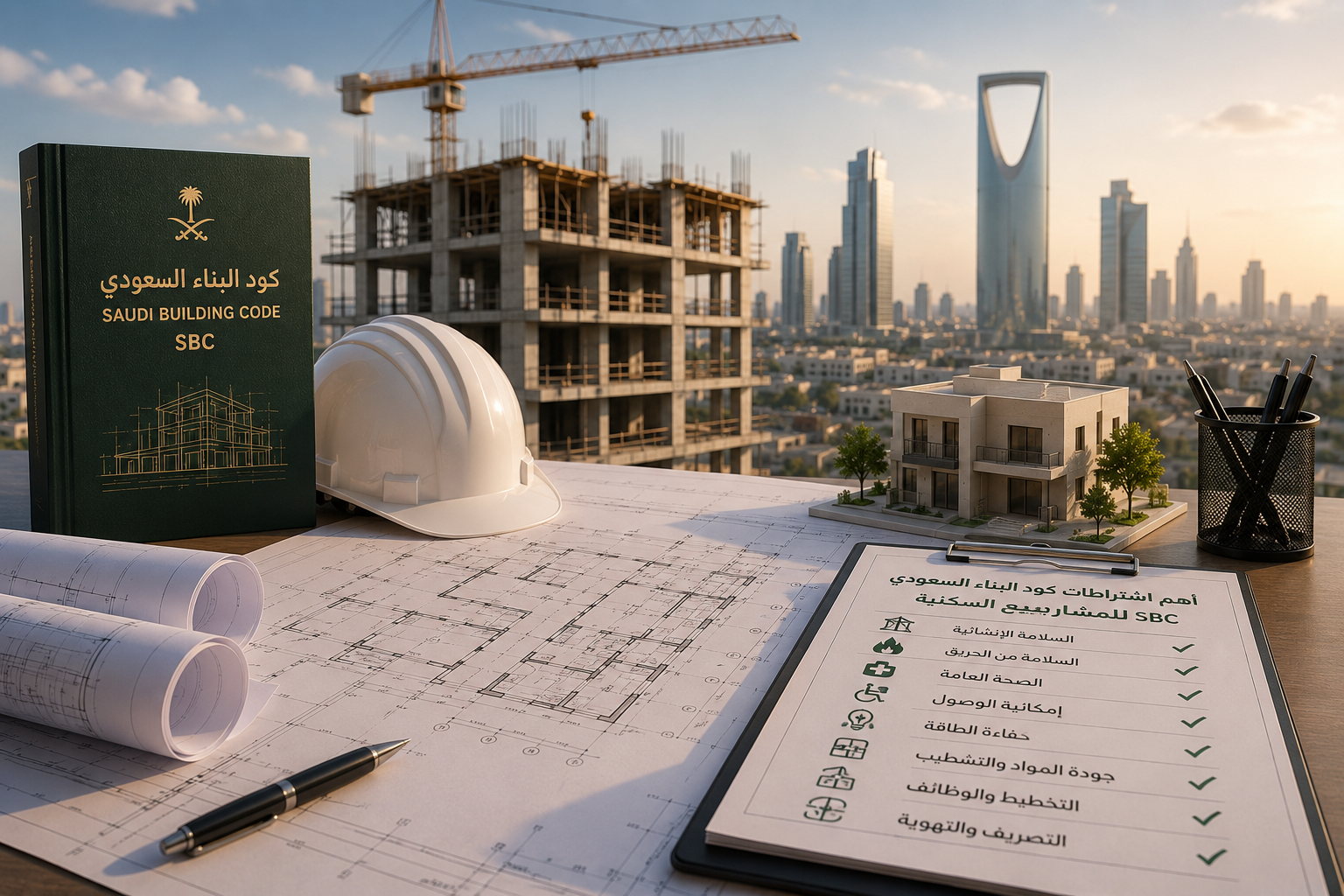
Introduction to the Saudi Building Code
The Saudi Building Code, commonly known as the SBC, is a set of standards and requirements established by the Saudi government to regulate construction operations in the Kingdom. The main objective of this code is to improve the quality of residential and commercial projects by setting clear standards for materials, design, safety, and construction practices. The Saudi Building Code aims to provide a safe and healthy living environment, which is a top priority within the framework of Saudi Vision 2030.
The Saudi Building Code helps unify processes and standards across the various regions, making it easier for contractors and developers to understand local and national requirements. This unification helps achieve greater efficiency and enhances the quality of buildings. The code also helps reduce accidents and injuries that may result from improper construction practices, which reflects the importance of compliance for all parties involved.
Furthermore, the Saudi Building Code promotes the concept of sustainability in construction projects by encouraging the use of renewable energy resources and modern construction technologies. Adopting such ideas reflects the Kingdom’s commitment to addressing environmental challenges and balancing urban expansion with environmental protection.
In light of the rapid growth of the construction sector in Saudi Arabia, compliance with the requirements of the Saudi Building Code has become essential to ensure that projects are executed in line with approved international and local standards. Strengthening these standards helps achieve sustainable development of cities and residential projects and contributes to improving the quality of life for citizens.
General Requirements for Residential Projects
Under the Saudi Building Code (SBC), residential projects must comply with a number of basic standards to ensure safety and quality of life for residents. These requirements include security and health provisions, and they are an integral part of the planning and execution of residential projects.
One of the most important aspects is ensuring the structural safety of buildings. Structures must be designed and built to withstand prevailing environmental conditions such as earthquakes and wind. Engineers and designers must adhere to the specific technical standards that ensure the building’s ability to withstand these challenges.
In addition, emphasis must be placed on providing a healthy environment for residents, which includes ensuring adequate ventilation and natural lighting. Sanitary drainage and water systems must also comply with the applicable health standards.
Accessibility for persons with special needs must also be taken into account, which means providing routes and facilities that make it easier for them to move around within the project. This point is considered one of the essential elements for ensuring the inclusiveness of residential communities and the exclusion of no group.
With regard to security, installing fire alarm systems and surveillance cameras has become a necessity for various communities, enhancing the personal security of residents. Consequently, taking all of these general requirements into account is a pivotal step toward achieving integrated and successful residential projects in the Kingdom.
Urban Planning and Its Requirements
Urban planning is the process that regulates land use and defines urban patterns in residential projects, and it is a fundamental part of the Saudi Building Code (SBC). Urban planning aims to improve the quality of life in communities by providing integrated and safe residential environments. It is important for these plans to align with the requirements set by local authorities to ensure the sustainability and effectiveness of development.
The basic rules of urban planning include several criteria, such as determining building heights, building ratios, and the suitability of the selected sites for residents. For example, some height regulations determine whether multiple floors can be built or which architectural designs can be implemented in a particular area. This helps maintain the balance of the urban landscape and the comfort of residential areas.
As for building ratios, they refer to the restrictions that define the percentage of built-up area relative to the total land area. These ratios help achieve the best use of land and enhance property values. Developers and planners must observe these requirements carefully to avoid violations that may lead to legal penalties.
Furthermore, urban planning also includes the appropriate distribution of public facilities such as parks, schools, and markets, to ensure that all necessary services are available to residents. Thus, successful urban planning reflects a commitment to achieving balanced development that supports the comfort and well-being of community members.
Materials and Construction
The requirements of the Saudi Building Code (SBC) call for compliance with a set of provisions relating to the materials used in construction operations. These provisions aim to ensure the safety and quality of residential projects, taking into account factors such as material durability, environmental performance, and compatibility with local and international standards.
When selecting materials, contractors and developers must consider several important aspects. First and foremost, the materials used must be approved and meet the standards specified in the building code. This aims to provide a safe environment for users and reduce the risks associated with non-compliant construction.
Second, it is essential to focus on the environmental sustainability of the materials used. It is preferable to choose materials that are recyclable or made from natural sources with low carbon emissions. This is in line with Saudi Arabia’s vision of promoting environmental sustainability and encouraging the use of environmentally friendly building materials.
Also, the thermal performance of materials should be considered, especially given the prevailing climatic conditions in Saudi Arabia. Materials that help insulate against heat play a major role in improving energy efficiency and reducing air conditioning costs. It is recommended to use insulating materials strategically to ensure the comfort of residents.
Another aspect to consider is economic factors. Developers must take into account the total cost of materials, including shipping, installation, and future maintenance costs. Choosing materials that are reasonably priced and suitable is part of achieving a balance between quality and the project’s set budget.
Electrical and Plumbing
Electrical and plumbing systems are essential elements in the execution of residential projects, as they play a vital role in providing security and safety for the residents of these projects. According to the Saudi Building Code (SBC), there is a set of requirements that must be followed to ensure that safe and approved electrical and plumbing systems are installed.
With regard to electrical systems, all designed systems must be able to meet the residents’ power needs without any problems. Contractors must ensure the use of approved electrical materials that comply with Saudi standards. Electrical installations must include automatic circuit breakers to protect against overloading, in addition to following precise layouts that make access to electrical panels easy without causing any inconvenience in the living spaces.
As for plumbing systems, the Saudi Building Code requires that the pipes and fittings used be able to withstand water pressure and facilitate effective flow. These systems must include good design of drainage points to prevent any potential blockages or leaks. Furthermore, emphasis should be placed on using materials approved by the government authorities to ensure the continuity, quality, and safety of drinking water.
It is also advisable to prepare a periodic maintenance plan for all electrical and plumbing systems to ensure their continuity and effectiveness throughout the life of the project. These plans help identify any potential problems before they worsen, contributing to a safe and healthy living environment. It is clear from this that adhering to the standards in the Saudi Building Code (SBC) not only facilitates construction operations but also enhances the comfort and safety of residents in residential projects.
Ventilation and Air Conditioning Systems
Ventilation and air conditioning systems are an essential part of any residential project under the Saudi Building Code (SBC). These systems aim to achieve a comfortable and healthy environment for residents by controlling temperatures, humidity levels, and indoor air quality. To achieve these goals, the systems must be based on unified technical standards that ensure efficiency and sustainable practices.
Ventilation systems require adequate airflow to renew indoor air for the benefit of public health. It is recommended to design ventilation systems in line with the air change rates set by the relevant authorities, and the correct positions for installing the units must be observed. It is preferable to use adjustable ventilation systems that allow airflow to be controlled based on the actual needs of residents. It should also be ensured that ventilation openings draw air from clean areas free of pollutants.
On the other hand, air conditioning systems must be designed to ensure uniform temperature distribution throughout the living spaces, which contributes to enhanced comfort. Air conditioning systems should include central air conditioning systems or air handling units, taking into account the electrical loads and the cooling capacity of the unit. It is also necessary for the systems to meet the requirements of the Saudi Building Code (SBC) and to be able to cope with climatic changes in the region.
In conclusion, the technical requirements for ventilation and air conditioning systems in the Saudi Building Code (SBC) fulfill the comfort conditions required for residents, thereby enhancing health benefits and well-being. Compliance with these requirements is therefore an integral part of any successful residential project.
Protection and Safety Systems
Protection and safety systems are considered essential elements of the Saudi Building Code (SBC) for residential projects. These systems aim to secure the safety of people and property from potential hazards, including fires and natural disasters. Construction projects must comply with the stipulated requirements to ensure effective protection.
Firefighting systems include a set of important requirements, such as installing automatic sprinkler systems, manual sprinklers, and early warning. For example, the Saudi Building Code requires high-level alarm systems that can quickly detect smoke or heat emitted by fires, which facilitates evacuation operations. Firefighting systems must also be integrated into the project layout to ensure easy access to them in emergencies.
In addition to fire systems, safety requirements also include providing appropriate evacuation means. Emergency corridors must be clear and wide enough to ensure that people can exit safely and quickly. Therefore, a coordinated evacuation plan must be prepared that outlines the methods and procedures for ensuring residents’ safety during crises.
Furthermore, safety standards include risk assessment and providing appropriate training for residents and building staff. Individuals must receive the necessary awareness on how to handle emergencies, as well as how to use protective equipment, such as fire extinguishers. It is important to conduct periodic drills to test the effectiveness of these protective systems, which ensures that everyone is ready to take responsibility in emergencies. Therefore, compliance with protection and safety systems is a key element in enhancing security and community peace in residential projects.
Inspection and Monitoring
The inspection and monitoring stage is one of the vital stages in construction operations, and it plays a fundamental role in ensuring that the Saudi Building Code (SBC) is implemented correctly. This stage is an effective means of verifying compliance with the specified standards and measures, which contributes to enhancing structural safety and providing a safe living environment.
Having a specialized team to follow up on inspection operations ensures that all aspects of the project conform to the established technical and environmental requirements. This includes reviewing engineering designs and inspecting the materials used in construction, in addition to monitoring all engineering responses that may arise during the work. This should be done periodically and regularly to ensure that no violations occur that could negatively affect the quality of the final project.
Also, the effectiveness of monitoring the execution of residential projects depends on the combined efforts of contractors, supervisors, and engineers. Effective cooperation among these parties enhances inspection results and reduces potential risks. If any deviations from the code are discovered, prompt action must be taken to correct them to ensure that the project stays on the right track.
Furthermore, inspection and monitoring contribute to building trust among the parties involved. Compliance with the Saudi Building Code raises the level of quality, which positively affects the reputation of the contractor and developer. It is important to keep a documented record of all inspection work to ensure transparency and accountability, which also ensures higher levels of safety for end users.
Conclusion and Recommendations
The Saudi Building Code (SBC) is a practical framework aimed at improving the quality and efficiency of residential projects in the Kingdom. From reviewing the key points of this code, it is clear that it focuses on providing a safe and healthy living environment for citizens. It also includes specific requirements related to design, construction, and safety, reflecting the Kingdom’s commitment to achieving sustainable development.
The recommendations for those working in the construction field include the need for full compliance with the provisions of the Saudi Building Code. Adherence to laws and regulations is an essential part of achieving project objectives and ensuring the quality of the materials and methods used. Engineers and contractors must be fully aware of the updates and amendments made to the code, thereby maintaining compliance with national standards.
It is also necessary to raise workers’ and technicians’ awareness of the importance of complying with the building code, through organizing workshops and training courses. Such activities strengthen the culture of safety and quality in the construction field. Partnership between government entities and the private sector should also be encouraged to exchange knowledge and experience in this field.
In conclusion, the Saudi Building Code is a vital tool for enhancing the safety and quality of residential projects. Every effort should be directed toward strengthening compliance under this code to ensure a safe and sustainable future for the Kingdom’s infrastructure.